dog training · jumping · behavior · orange county
How to Stop My Dog From Jumping on People
To stop your dog from jumping on people, reward four paws on the floor every time and remove attention from jumping. Here’s a simple plan that works better than yelling or kneeing.
▶ Watch Kayna explain it in about a minute — or read on. Watch on YouTube
Video transcript
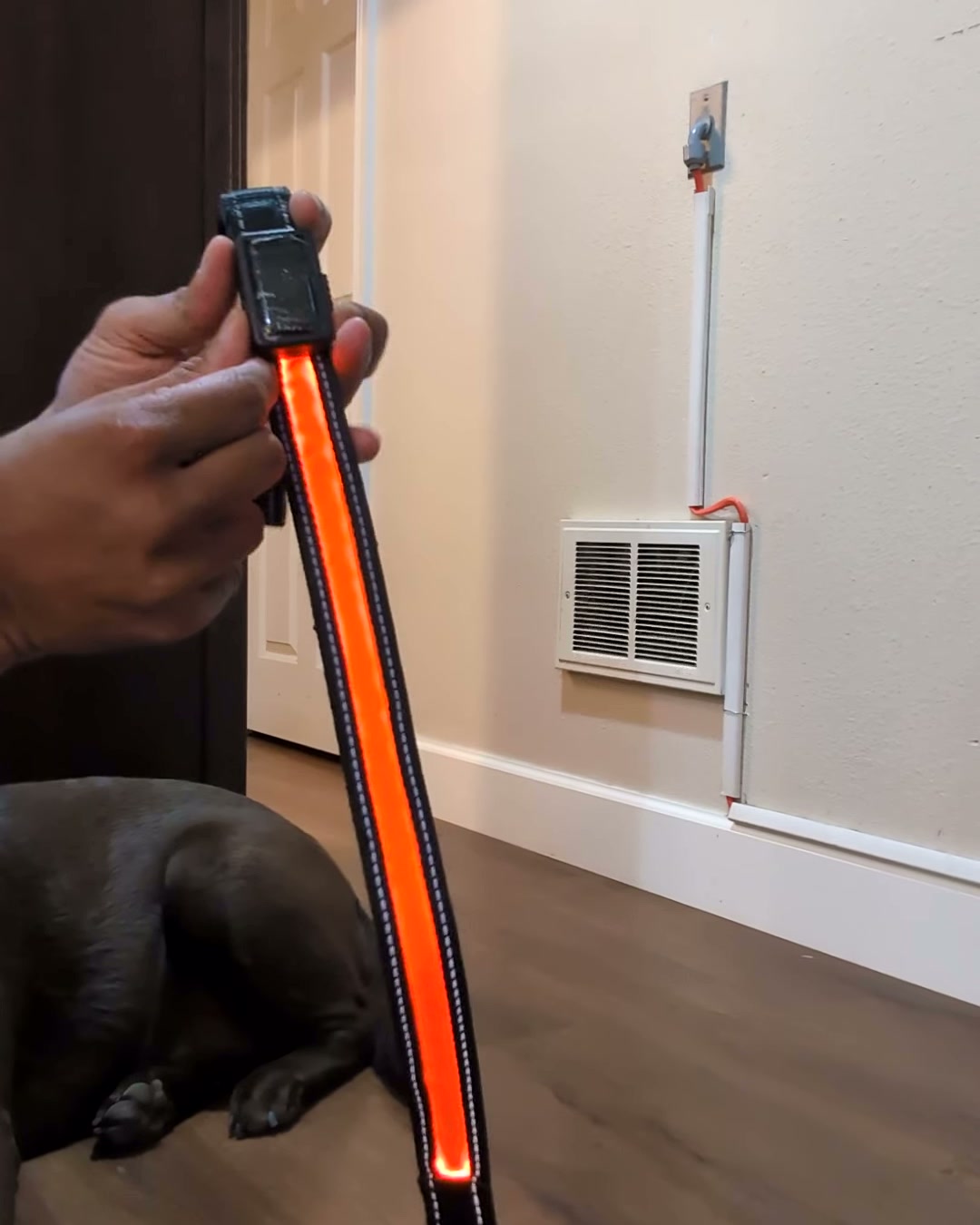
Does your dog turn greetings into trampoline time? I’m Kayna from Pawdy, and I’ll show you how to stop it calmly. Stick around for the trick that makes guests way easier. Most dogs jump for attention. Even pushing them off can still feel rewarding. When your dog jumps, turn away. No petting. No talking. No eye contact. The second four paws hit the floor, reward fast. Praise, petting, or a small treat. Before greetings get wild, ask for something simple like sit, if your dog knows it. Here’s the trick: tell guests to ignore your dog first. Calm gets attention. Jumping makes people step back. Practice in easy places before busy ones. Home first, then the sidewalk, then harder spots. Does your dog do this? Tell Kayna below! For evening practice, the {{product:LED Light-Up Dog Leash}} is a handy pick. See it at pawdyshops.com. See you soon
If you want to know how to stop my dog from jumping on people, the short answer is this: reward your dog for keeping four paws on the floor, and make jumping stop working. Most dogs jump because it gets attention fast, even when the attention is annoyed.
The good news is that jumping is one of the most fixable manners problems. You do not need to scare your dog, knee them in the chest, or shout. You need a clear pattern your dog can understand every single time.

Why dogs jump on people in the first place
Jumping is usually not defiance. It is excitement, habit, or a learned shortcut to getting noticed.
Dogs often jump because:
- They are excited to see people
- They want face-level contact
- They have been rewarded for it before
- Visitors accidentally encourage it
- The dog has too much energy in that moment
Puppies do it because they are puppies. Adult dogs do it because it still works.
That is why punishment alone usually fails. If your dog jumps, gets pushed off, and then gets eye contact, talking, touching, or laughter, your dog may think, “Great, that worked.”
How to stop my dog from jumping on people: the basic rule
Your dog should learn one very simple idea: jumping makes attention go away, and four paws on the floor makes good things happen.
That means you need to be consistent about two responses:
| Dog's choice | Your response |
|---|---|
| Jumps up | Turn away, stay calm, no petting, no talking |
| Stays down | Mark it with praise and reward attention or a treat |
Timing matters. Reward the good choice right away. Remove attention from jumping right away.
If your dog is very excited, even one second of four paws on the floor is worth rewarding at first.
Start before the greeting gets wild
A lot of owners wait until the dog is already springing up. That is late in the process. It works better to interrupt the pattern earlier.
Before opening the door or greeting your dog after work:
- Ask for a simple behavior like sit, if your dog knows it
- Keep your own body calm and quiet
- Hold greetings for a moment if your dog is bouncing
- Reward calm before touching or talking a lot
Think of greetings as training reps, not just chaotic happy moments.
In busy places around Orange County, like a trailhead or outside a cafe patio, this matters even more. People often reach toward a dog right away, which can accidentally invite jumping.
What to do when guests come over
Visitors are where training often falls apart. Your dog may do well with you and then launch at everyone else.
Set up the greeting instead of hoping for the best.
Try this plan:
- Put your dog on leash before guests enter
- Ask guests to ignore your dog at first
- Wait for four paws on the floor
- Then allow calm petting for a second or two
- If your dog jumps, guest steps back and attention stops
- Try again
Short, boring repetitions teach faster than one long, overexcited greeting.
If your dog gets too wound up to think, create more distance first. A baby gate, crate, or another room for a minute can help your dog reset. That is management, not failure.
Teach an incompatible behavior
One of the best training shortcuts is to give your dog something else to do that cannot happen at the same time as jumping.
Good options include:
- Sit
- Hand target
- Go to mat
- Carry a toy during greetings
A “go to mat” behavior is especially useful for doorbells and holiday visitors. November can be busy with family dropping by, and a simple station spot can make greetings much calmer.
If your dog loves toys, holding one in the mouth can also reduce jumping for some dogs. It will not help every dog, but it can help the dogs who get mouthy and wiggly when excited.
Common mistakes that keep jumping going
Many dogs keep jumping because the humans are not all doing the same thing.
Watch out for these common mistakes:
- Petting the dog while saying “off”
- Sometimes allowing jumping and sometimes not
- Laughing or talking during jumping
- Asking for too much too soon around guests
- Letting strangers reward rude greetings
- Training only inside the house
Dogs are great pattern readers. If the rule changes depending on the person, place, or mood, training takes longer.
If your dog jumps from overexcitement outdoors
Some dogs jump most on walks, especially when they see a favorite person, another dog, or a fun place ahead.
In that case, work on the skill in lower-distraction spots first. Then slowly practice in harder places.
A simple progression looks like this:
- Quiet room at home
- Front door
- Sidewalk outside
- Quiet park area
- Busier trail or neighborhood spot
Keep sessions short. A few good reps beat a long session where your dog gets too hyped to learn.
What about puppies?
Puppies need the same lesson, just with easier expectations. Reward them often for standing or sitting politely. Because puppies are small, people tend to allow jumping and call it cute. That can turn into a much bigger problem later.
If you have kids or older adults around, start early. Even friendly jumping can knock someone off balance.
When jumping may need extra help
If your dog is jumping with mouthing, nipping, fear, or intense arousal, the plan may need to be more customized. If it is happening around strangers because your dog seems anxious, ask a qualified trainer for help. If you are unsure whether pain, discomfort, or another health issue is affecting behavior, ask your vet.
That does not mean something is seriously wrong. It just means the reason behind the jumping matters.
A simple 7-day practice plan
Here is a realistic way to start:
Day 1-2: Reward four paws on the floor at home, many times a day
Day 3-4: Practice calm greetings with household members
Day 5: Add the door routine with one low-key visitor
Day 6: Practice outside in a quiet area
Day 7: Repeat the hardest step that still lets your dog succeed
If your dog struggles, make it easier, not louder.
A helpful tool for practice
Training is easier when you can safely control distance and greetings without grabbing at your dog. A simple leash setup can help during guest practice and outdoor reps.
It is a light-up LED leash that glows along its length, which can be handy for early evening practice as November days get darker. You can see more at /products/led-light-up-dog-leash.
Frequently asked questions
How to stop my dog from jumping on people without yelling?
Use calm, consistent consequences. Turn away and remove attention when your dog jumps. The moment your dog has four paws on the floor, reward with praise, petting, or a treat. Quiet consistency usually works better than loud corrections.
Should I tell my dog to sit every time someone comes in?
If your dog already knows sit well, yes, it can help. But do not rely on the cue alone. You still need to reward calm behavior and stop attention when jumping happens.
Why does my dog only jump on guests and not on me?
Guests are more exciting, less predictable, and often accidentally reward the behavior. Many dogs also rehearse jumping less often with guests, so the excitement stays high.
Will my dog grow out of jumping?
Some dogs improve with maturity, but many do not grow out of it on their own. If jumping keeps getting rewarded, it usually becomes a stronger habit over time.
Shop this article
Replies (0)
No replies yet — start the conversation.
Keep reading

airtag dog collar · 6 min read
Best AirTag Dog Collar: What Actually Matters
Looking for the best AirTag dog collar? Here’s what really matters: secure fit, comfort, visibility, and realistic expectations about what AirTag can and can’t do for dogs.

dog health · 7 min read
My Dog Keeps Throwing Up: What to Do First
If your dog keeps throwing up, start by watching for red flags, resting the stomach, and calling your vet when it’s more than a one-off. Here’s a calm, practical guide to what helps and what needs a vet.

dog behavior · 7 min read
Why Does My Dog Stare at Me? What It Usually Means
Why does my dog stare at me? Usually it means attention, anticipation, confusion, or bonding. Here’s how to read the context and when to ask your vet.