dog behavior · training · dog communication · orange county
Why Does My Dog Stare at Me? What It Usually Means
Why does my dog stare at me? Usually it means attention, anticipation, confusion, or bonding. Here’s how to read the context and when to ask your vet.
▶ Watch Kayna explain it in about a minute — or read on. Watch on YouTube
Video transcript
Your dog is probably training you back. I’m Kayna from Pawdy, and I’ll help you read that look fast. Stick around for the clue that changes everything. First, dogs stare when they want something. Dinner, a walk, the toy basket, the good stuff. Here’s the clue that changes everything: don’t just read the eyes. Read the whole dog. Soft eyes and a loose body usually mean bonding, attention, or waiting for your next move. A hard stare with a stiff body is different. Give space, especially around food, toys, or a favorite spot. Some dogs also stare because they’ve learned humans are easy to train. One look, and snacks appear. If your dog stares all day, check the basics: potty, water, exercise, rest, and something to do. Does your dog do this? Tell Kayna below! If your dog needs a calm job at home, the silicone lick mat can help turn waiting time into licking time. You’ll find it at pawdyshops.com. Next, I’ll show you one easy way to tell boredom staring from stress staring. Follow so you don’t miss it. See you soon!
If you’re wondering why does my dog stare at me, the short answer is that dogs usually stare because they want something, they’re trying to read you, or they simply feel connected to you. The important part is the context: a soft, relaxed stare is very different from a hard stare with a stiff body.
Dogs watch us closely. They learn our routines, our facial expressions, and the tiny signs that predict a walk, dinner, or a ride in the car. Sometimes that long look is sweet. Sometimes it means, “Please notice me.” And sometimes it’s a clue that your dog feels unsure or uncomfortable.

Why does my dog stare at me? The most common reasons
Here are the most common explanations for staring:
| What the stare may mean | What it often looks like |
|---|---|
| Wants something | Looking at you, then at the door, leash, bowl, or treat spot |
| Waiting for your next move | Watching you while you cook, dress, or pick up keys |
| Learned it gets results | You often respond with food, petting, play, or attention |
| Bonding | Soft eyes, relaxed face, calm body, maybe lying nearby |
| Confusion or concern | Head tilt, alert ears, still posture |
| Discomfort or stress | Stiff body, whale eye, frozen posture, guarding space or items |
Most of the time, staring is normal communication. Dogs are very good at learning that humans respond when they make eye contact. If staring works, they’ll keep doing it.
Read the whole dog, not just the eyes
A stare by itself does not tell the whole story. Look at your dog’s body, the environment, and what happened right before the stare started.
A relaxed dog may have soft eyes, loose ears, an open mouth, and an easy posture. That kind of stare often means affection, expectation, or quiet attention.
A dog who is tense may look very still. You might notice a closed mouth, hard eyes, a lowered head, a body leaning over a toy or food item, or the whites of the eyes showing. That kind of stare is different. Give space, avoid reaching in, and think about what your dog may be protecting or worrying about.
If your dog stares most when you open a snack, touch the leash, or head toward the closet where the treats live, the mystery is usually solved.
Your dog may be watching for patterns
Dogs are routine experts. They notice little details we barely think about.
Your dog may stare because:
- you always feed breakfast after making coffee
- shoes mean a walk is coming
- the laptop closing means couch time
- a certain cabinet means treats
- your Halloween candy bowl means guests and doorbells soon
In homes around Orange County this time of year, dogs can get extra watchful because routines start changing. Costumes come out, packages arrive, decorations move around, and the front door gets more action. Some dogs stare more when they’re trying to figure out what all the weird October energy means.
When staring is a request for attention
Many dogs stare because it works beautifully. They look at you. You talk to them. Then they get a cuddle, a snack, or a game.
That’s not bad. It just means the behavior has been rewarded.
If your dog stares at you for attention and you don’t mind, there’s no real problem. But if it turns into constant pestering, teach a clearer way to ask for what they need.
Try this:
- Notice what your dog usually wants at that time of day.
- Ask for an easy behavior first, like “sit” or “go to bed.”
- Then give the walk, play session, or snack.
- Be consistent so your dog learns a calmer pattern.
This helps replace intense staring with a simple routine your dog can understand.
Sometimes staring is part of affection
Dogs and humans often use eye contact as part of bonding. A calm dog may look at you just because they like being near you and are checking in.
You’ll usually notice this kind of stare during quiet moments:
- relaxing on the couch
- sitting together in the yard
- winding down after a walk
- waiting beside your desk
If your dog’s body is loose and peaceful, this is often just one of the ways they connect with you.
When a stare means “I’m not comfortable”
This is the part that matters most. Some staring is not a request or a sweet moment. It can be a warning.
Be more careful if your dog is staring while:
- guarding food, chews, toys, or a sleeping spot
- being hugged or cornered
- feeling startled by guests, costumes, or children moving fast
- dealing with pain or not feeling well
Do not punish a warning stare. Punishment can remove the warning without removing the discomfort underneath. Instead, create space, lower pressure, and look for the trigger.
If your dog frequently stiffens, freezes, or stares hard over resources or handling, a qualified trainer or behavior professional can help. If the behavior is new or your dog also seems sore, tired, or different physically, ask your vet too.
Could staring ever mean a health problem?
Sometimes, yes. Ask your vet if your dog’s staring is sudden, unusual, or comes with other changes.
Watch for things like:
- bumping into objects
- seeming confused
- staring at walls or into space
- pacing or restlessness
- changes in sleep, appetite, hearing, or vision
- head shaking, pain, or other signs that something feels off
There are many possible reasons for behavior changes, especially in puppies and senior dogs, so it’s best not to guess. A vet can help you figure out whether it’s behavior, discomfort, vision changes, anxiety, or something else.
What to do if your dog stares at you all day
Start with a simple checklist.
- Make sure basic needs are met: potty break, water, exercise, rest, and mental activity.
- Notice the timing: before meals, during work calls, at sunset, when neighbors pass by?
- Look for patterns in your response: do you accidentally reward the stare every time?
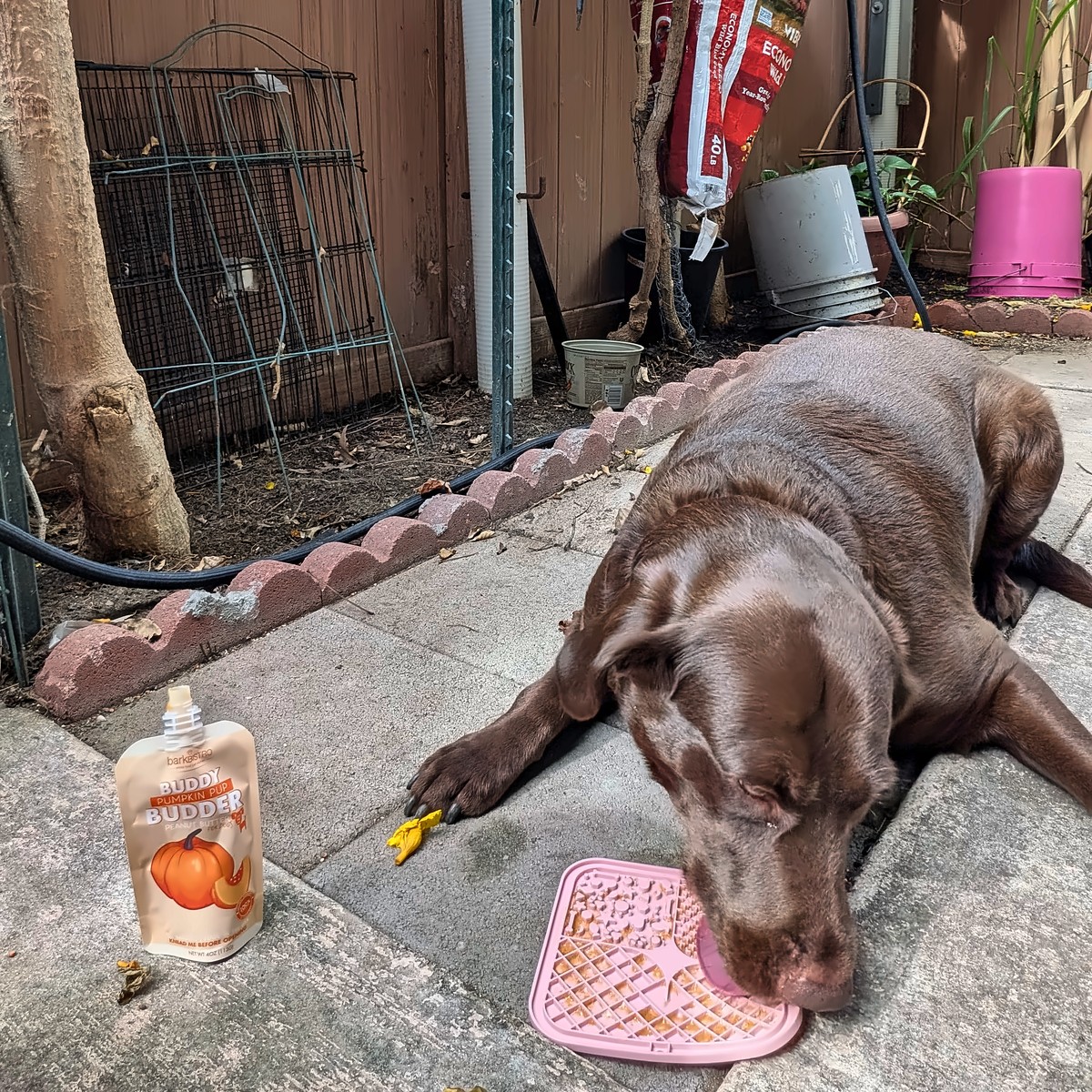
- Give your dog a better job: place mat, chew time, a short training session, or a food activity.
For many dogs, boredom is part of the picture. A few minutes of licking can help some dogs settle during busy moments, visitors, or noisy evenings.
That’s not a cure for every kind of staring, of course. But if your dog is staring because they want something to do or need help relaxing, it can be a useful tool.
A simple way to tell what your dog means
Ask yourself these three questions:
- What happened right before the stare?
- What does the rest of the body look like?
- What happens if I meet a basic need or change the situation?
If you answer those honestly, the reason is often much clearer.
A dog staring at your sandwich is very different from a dog staring while frozen over a chew. One is asking. One is warning. And one relaxed dog staring softly from the rug may just be saying, “I like being with you.”
Frequently asked questions
Why does my dog stare at me while I eat?
Usually because your dog has learned that human food time is interesting and sometimes rewarding. Look at the body language and the setup. A calm dog is probably hoping for a bite. A stiff dog near a high-value item may need more space and training around food manners.
Why does my dog stare at me with big eyes?
Big, soft eyes often mean attention, anticipation, or affection. If the body is loose and relaxed, it’s usually normal. If the eyes look wide because your dog is tense, frozen, or worried, give space and look for the cause.
Why does my dog stare at me at night?
At night, dogs may stare because they want a final potty break, a bedtime routine, attention, or help settling down. If nighttime staring is new, intense, or comes with restlessness or confusion, ask your vet for guidance.
Why does my dog stare at me and not blink?
A soft gaze can be normal, but a hard, still stare with a stiff body can be a sign of stress or guarding. The no-blink part matters less than the full picture. If you’re seeing tension, do not force contact. Create space and get help if needed.
Shop this article
Replies (0)
No replies yet — start the conversation.
Keep reading

dog health · 7 min read
My Dog Keeps Throwing Up: What to Do First
If your dog keeps throwing up, start by watching for red flags, resting the stomach, and calling your vet when it’s more than a one-off. Here’s a calm, practical guide to what helps and what needs a vet.

airtag dog collar · 6 min read
Best AirTag Dog Collar: What Actually Matters
Looking for the best AirTag dog collar? Here’s what really matters: secure fit, comfort, visibility, and realistic expectations about what AirTag can and can’t do for dogs.

dog training · 6 min read
How to Stop My Dog From Jumping on People
To stop your dog from jumping on people, reward four paws on the floor every time and remove attention from jumping. Here’s a simple plan that works better than yelling or kneeing.