dog behavior · health basics · myth busting · fall dog care
Why Dogs Eat Grass: Normal Habit or a Problem?
Many dogs eat grass sometimes, and it’s often harmless. Here’s what it can mean, when to watch more closely, and how to make walks and yard time easier on your dog.
▶ Watch Kayna explain it in about a minute — or read on. Watch on YouTube
Many dogs eat grass from time to time, and in most cases it is not an emergency. The bigger question is whether your dog seems otherwise normal, or whether the grass eating comes with vomiting, stomach upset, frantic behavior, or a sudden change in appetite.
If your dog grabs a few blades on a walk and moves on, that can be a normal dog thing. If it is frequent, intense, or new for your dog, it is worth paying attention and asking your vet for advice.
Why dogs eat grass in the first place
There is no single reason that fits every dog. Grass eating can happen for a few different reasons, and sometimes it is probably just habit.
Common possibilities include:
- Curiosity, especially in puppies and young dogs
- Boredom or extra energy
- Enjoying the texture or taste
- Mild stomach upset
- A routine behavior that has simply “stuck”
- Wanting to chew something while outdoors
A lot of dogs seem to treat grass like a quick sniff-and-sample activity, especially on familiar routes or during relaxed yard time. Around Orange County, that might mean a neighborhood walk after a cool October morning or a pause on a trail where the grass is fresh from overnight moisture.
Does eating grass mean a dog is sick?
Not always. That is one of the biggest myths around this behavior.
Some dogs do eat grass when their stomach feels off, but many healthy dogs do it too. Grass eating by itself does not prove that a dog is sick, lacking nutrients, or trying to make themselves vomit.
What matters more is the full picture. Look at your dog’s overall behavior:
| What you notice | What it may suggest |
|---|---|
| Eats a little grass, acts normal, normal stool, normal appetite | Often a harmless habit |
| Eats grass fast and frantically, then vomits | Could be stomach irritation; ask your vet if it keeps happening |
| New grass eating plus low appetite or lethargy | More reason to check with your vet |
| Grass eating with diarrhea, repeated vomiting, or pain | Call your vet for guidance |
If your dog seems uncomfortable, unusually tired, or keeps throwing up, it is best not to guess.
Is grass eating dangerous?
The grass itself is not always the main problem. The bigger concern is what may be on it.
Potential risks include:
- Pesticides, herbicides, or fertilizers
- Sharp seed heads or rough plant material
- Intestinal irritation from eating a lot at once
- Picking up parasites or bacteria from contaminated areas
- Mistaking a harmful plant for plain grass
That is why location matters. A quiet backyard you know well is different from a public strip of landscaping beside a busy sidewalk. If your dog loves grabbing grass on walks, try steering them away from treated lawns and unknown plants.
When grass eating is probably no big deal
In many cases, it is just one of those odd dog behaviors that looks more dramatic than it is.
It is often less concerning when your dog:
- Eats small amounts
- Does it only once in a while
- Stays bright, playful, and hungry afterward
- Has normal poop
- Is not vomiting repeatedly
If that sounds like your dog, you may not need to do much beyond noticing patterns.
When to ask your vet
It is a good idea to ask your vet if:
- The behavior suddenly starts or gets much more frequent
- Your dog vomits often after eating grass
- There is diarrhea, constipation, or blood in stool or vomit
- Your dog seems painful, restless, or bloated
- Appetite drops or water intake changes a lot
- Your dog is eating non-food items in general, not just grass
Your vet can help figure out whether this looks like a harmless quirk, a diet issue, stress, or something medical. They can also tell you what details are most useful to track.
What you can do at home

You usually do not need to panic or completely stop every nibble. A practical approach works best.
Watch for patterns
Notice when it happens:
- Before breakfast?
- On long walks?
- During bored moments in the yard?
- Right before vomiting?
- Only in one location?
A simple note in your phone can help. Patterns give you better information than one random incident.
Make outdoor time more engaging
Some dogs seem to snack on grass when they are under-stimulated. If that might be your dog, add more sniffing, training, or play to the routine.
Short fetch sessions, scatter games in the yard, or a few easy cues during walks can help redirect that energy.
Offer fresh water on outings
Dry weather, warm afternoons, and active walks can leave dogs looking for something cool or interesting to mouth. Water breaks are a simple good habit, especially on trails or park days.
Avoid treated lawns and unknown plants
This is the big one. Even if grass eating itself is harmless for your dog, chemicals on the grass are a different story. Choose cleaner spots when you can, and redirect your dog from ornamental plants and public landscaping.
Do not punish it
If your dog grabs a mouthful of grass, yelling usually will not teach much. Calm redirection works better. Move along, offer a cue your dog knows, or guide them toward another activity.
Could diet or routine play a role?
Sometimes, yes. Hunger, meal timing, boredom, or digestive sensitivity may all affect the behavior. But there is no honest one-size-fits-all answer.
If your dog seems extra interested in grass when meals are delayed, mention that to your vet. If the behavior ramps up during stressful weeks, changes at home, or less exercise, that context matters too.
Just be careful with online advice that claims every grass-eating dog has the same deficiency or needs the same fix. Dogs are individuals.
A simple rule of thumb
If your dog eats a little grass now and then and otherwise seems completely fine, monitor it but do not panic. If the behavior is frequent, intense, or comes with vomiting or any other change in how your dog feels or acts, ask your vet.
That middle-ground approach is usually the most useful: stay observant, reduce obvious risks, and look at the whole dog, not just the grass.
You might like for walks and yard time
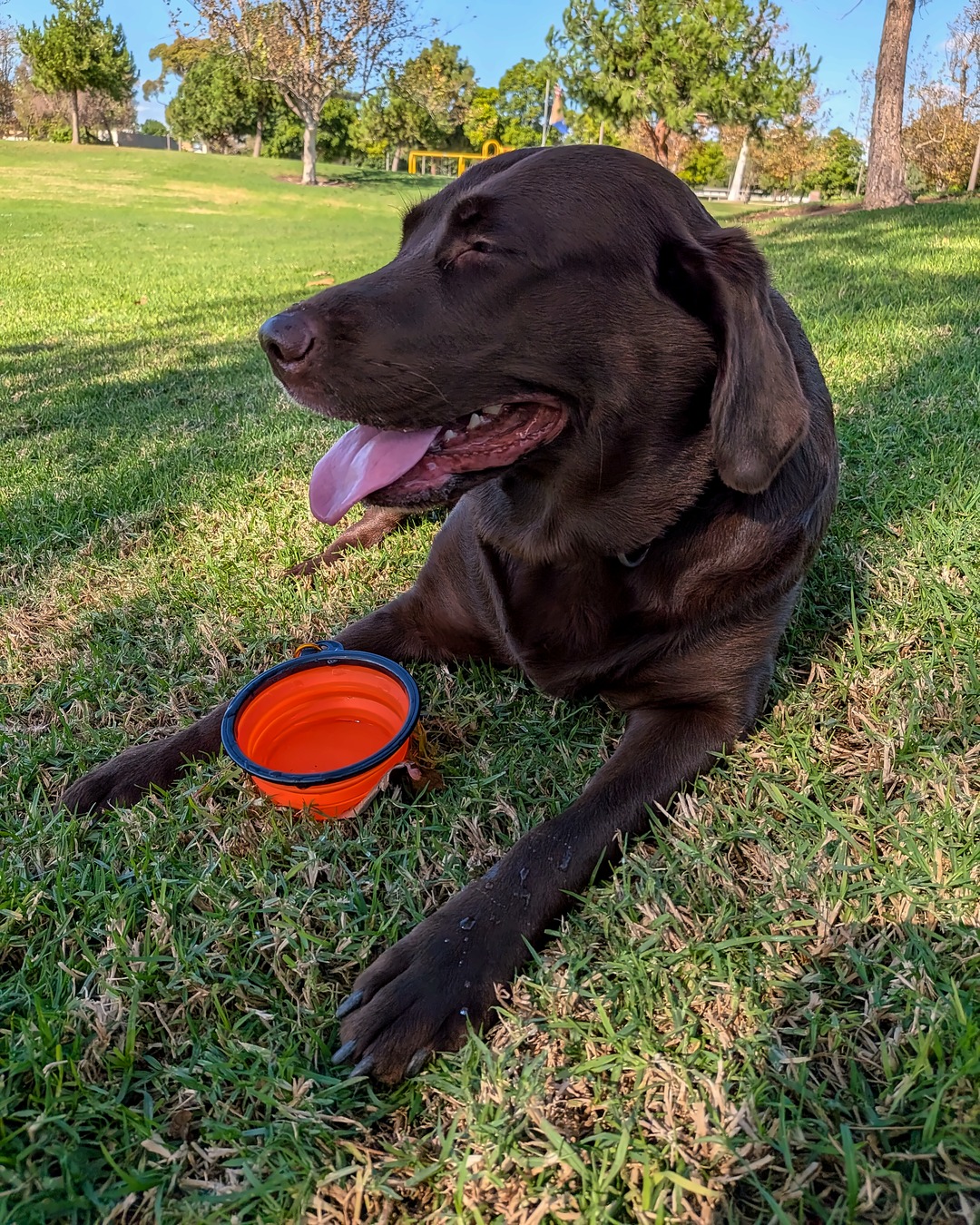
If your dog tends to mouth grass more on longer outings, bringing water along can help make breaks easier and more comfortable.
Frequently asked questions
Do dogs eat grass to make themselves throw up?
Sometimes a dog may eat grass when their stomach feels unsettled, but not always. Many dogs eat grass and do not vomit at all. It is better to look at the full pattern than assume one cause.
Is it okay to let my dog eat grass on walks?
Small amounts may be harmless for some dogs, but the risk is what is on the grass. Try to avoid treated lawns, roadside landscaping, and areas with unknown plants.
Should I stop my puppy from eating grass?
Puppies explore the world with their mouths, so some grass sampling is common. Redirect calmly, supervise closely, and ask your vet if your puppy is eating a lot, vomiting, or swallowing non-food items often.
What if my dog eats grass every day?
Daily grass eating is worth paying closer attention to, especially if it is new or intense. Track when it happens and ask your vet if there are any stomach issues, appetite changes, or repeated vomiting.
Shop this article
Replies (0)
No replies yet — start the conversation.
Keep reading

dog behavior · 6 min read
My Dog Keeps Shaking His Head: What It Usually Means
If your dog keeps shaking his head, it can be as simple as water in the ear or as serious as an ear problem. Here’s what to check at home, what not to do, and when to call your vet.

dog behavior · 7 min read
Why Does My Dog Stare at Me? What It Usually Means
Why does my dog stare at me? Usually it means attention, anticipation, confusion, or bonding. Here’s how to read the context and when to ask your vet.

travel · 7 min read
Best Collapsible Cup for Dogs: What Actually Matters
Looking for the best collapsible cup for dogs? Here’s what really matters, how to use one on walks, and how to pick a size your dog will actually drink from.